


Description
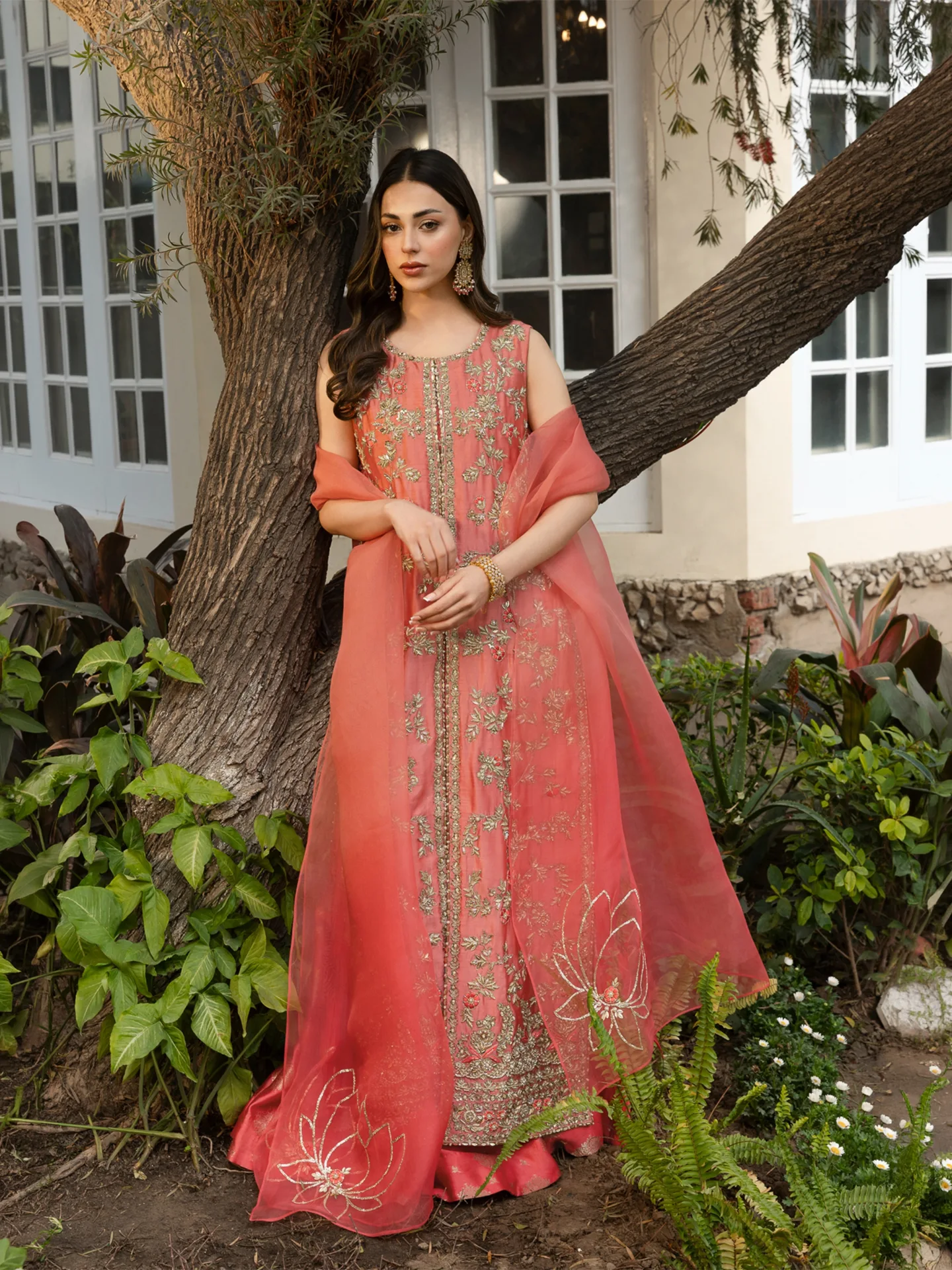
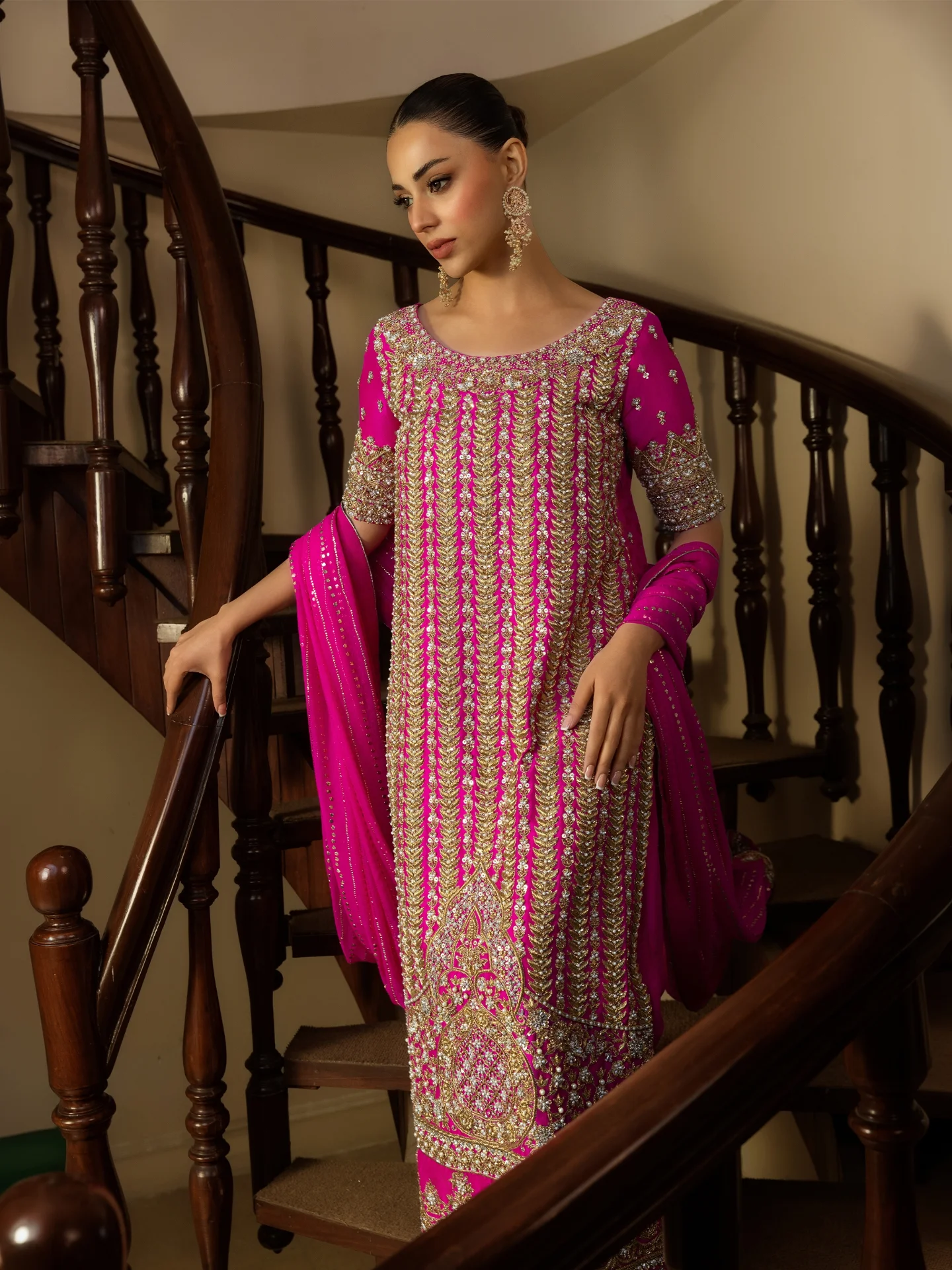
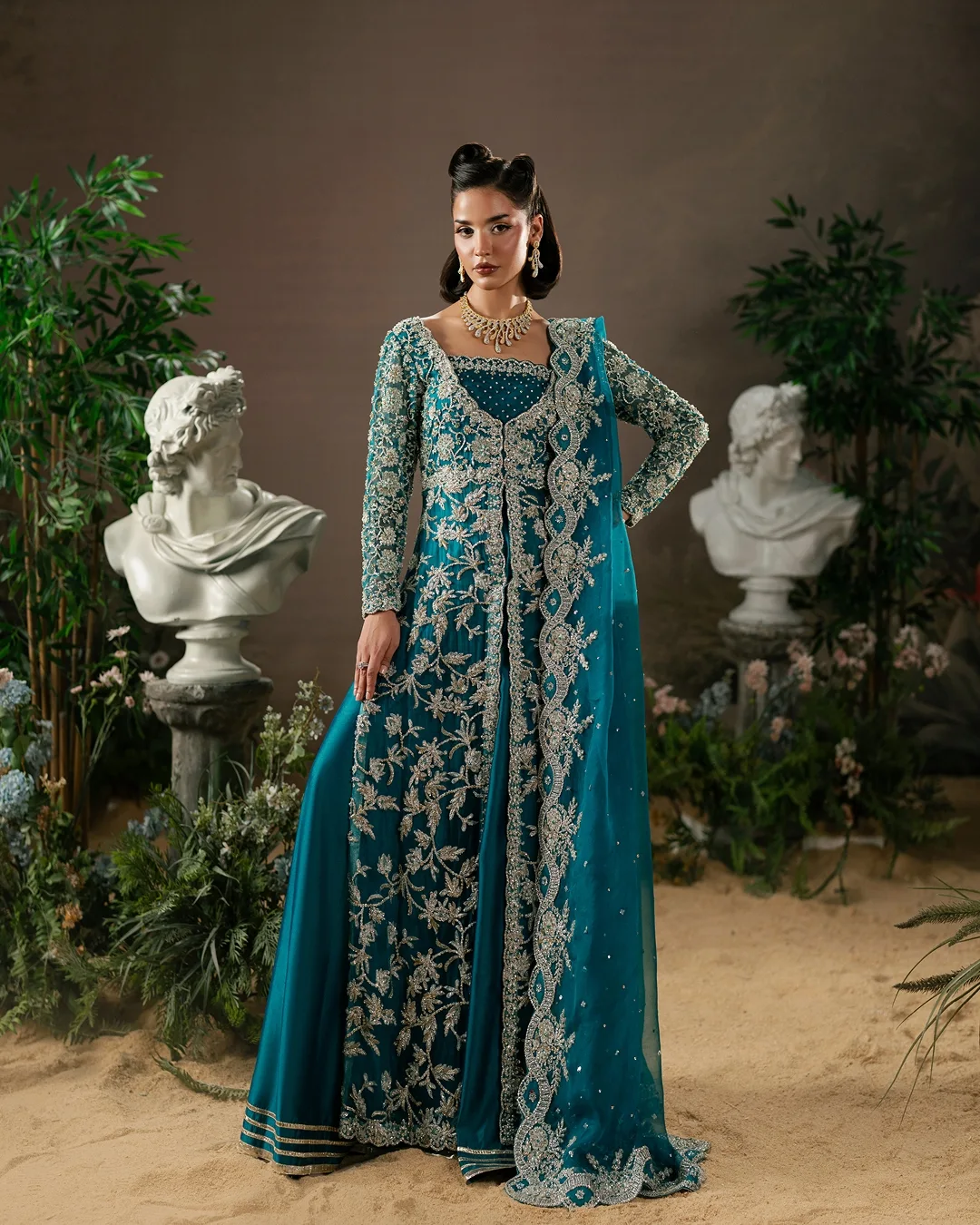
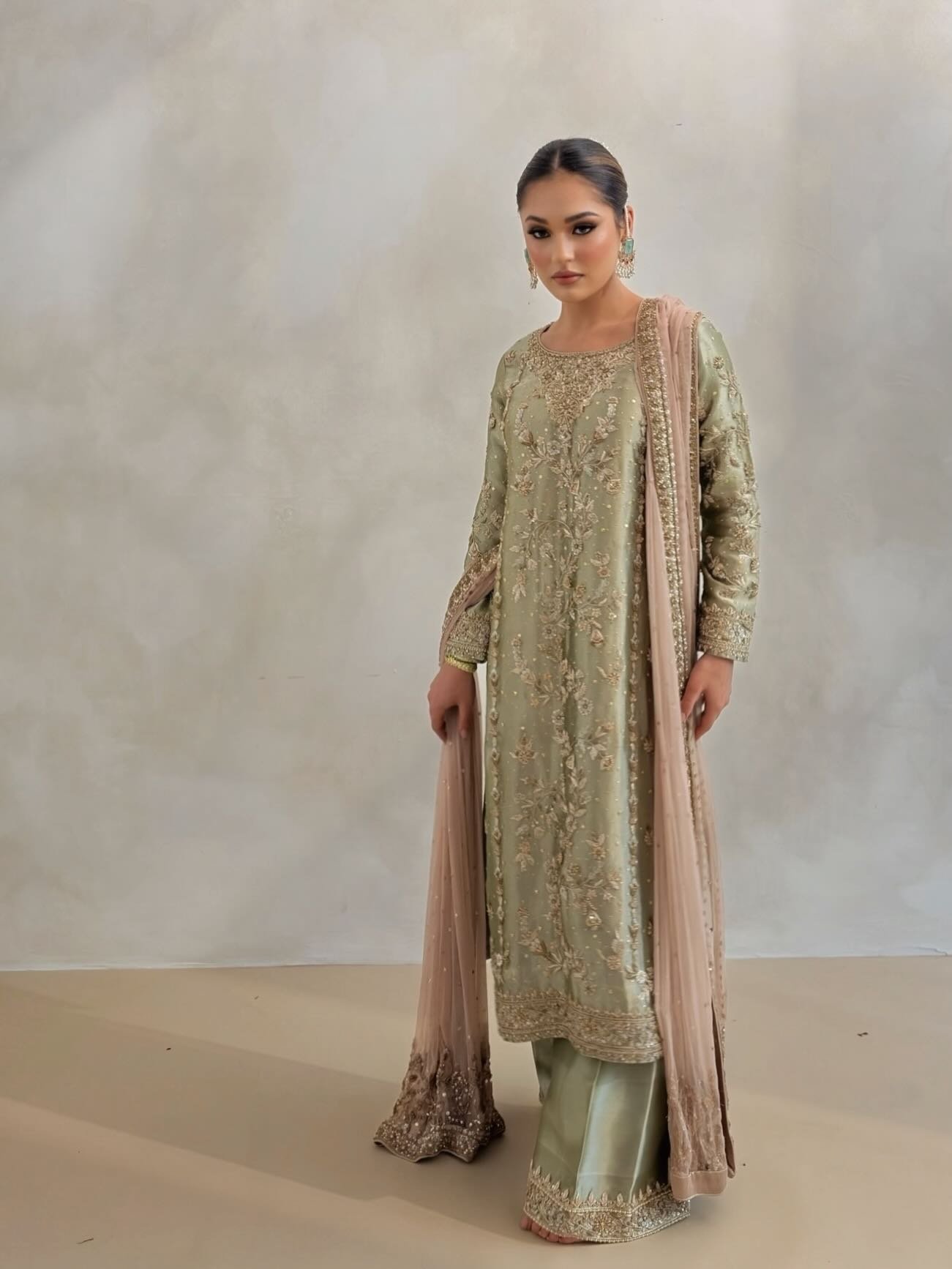
🧵 Design & Fabric Details
Here is a breakdown of the likely components of this beautiful dress:
1. Fabric (The Base)
The fabric appears to be soft, flowing, and sheer/semi-sheer, suggesting it’s suitable for heavy embroidery.
-
Likely Choices:
-
Georgette: A popular choice for Pakistani/Indian formal wear; it has a flowy, slightly textured feel.
-
Net/Tulle: Often used as an overlay for intricate zari (thread) work.
-
Chiffon/Silk Blend: May be used for a more luxurious drape.
-
2. Color
-
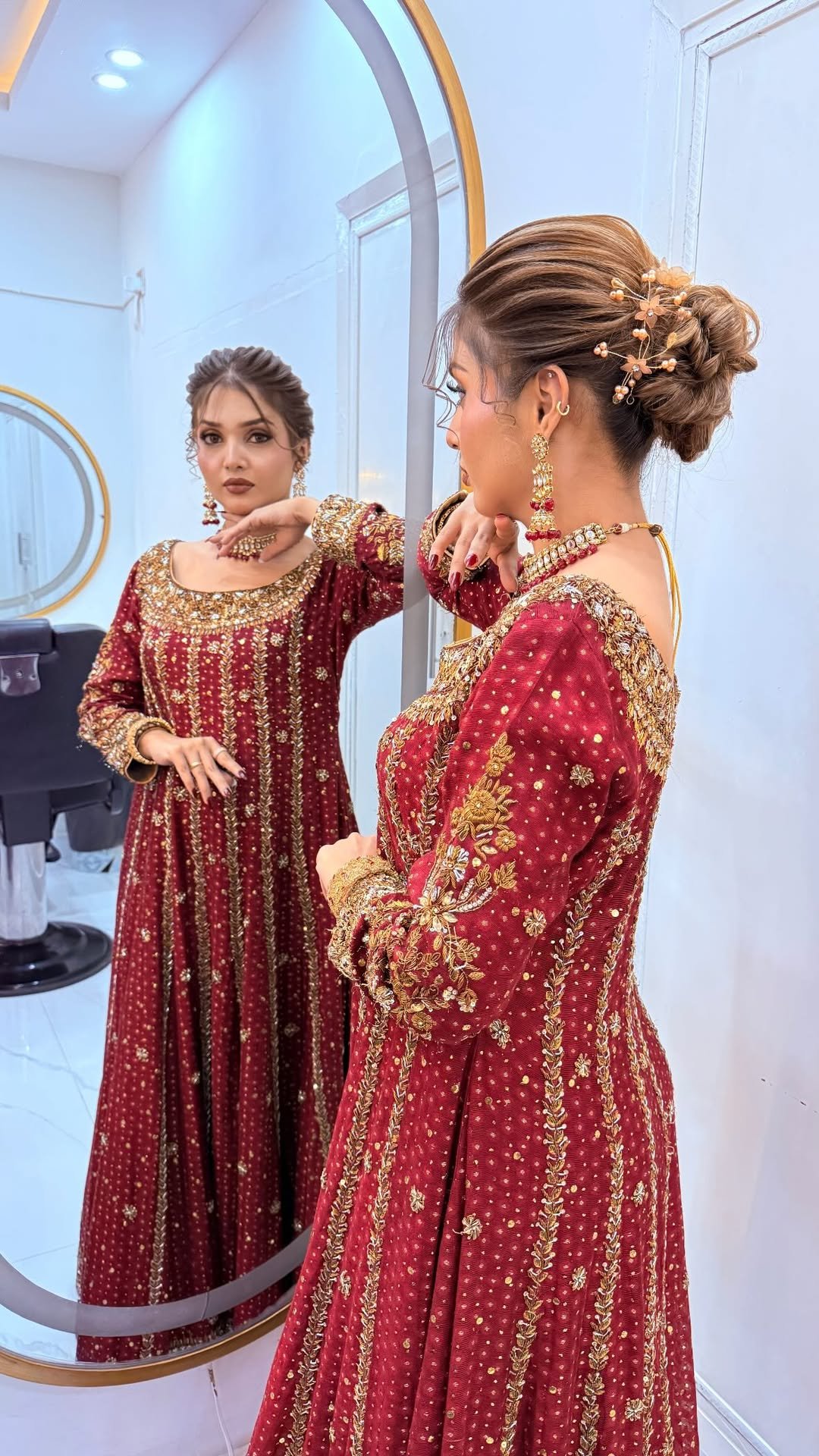
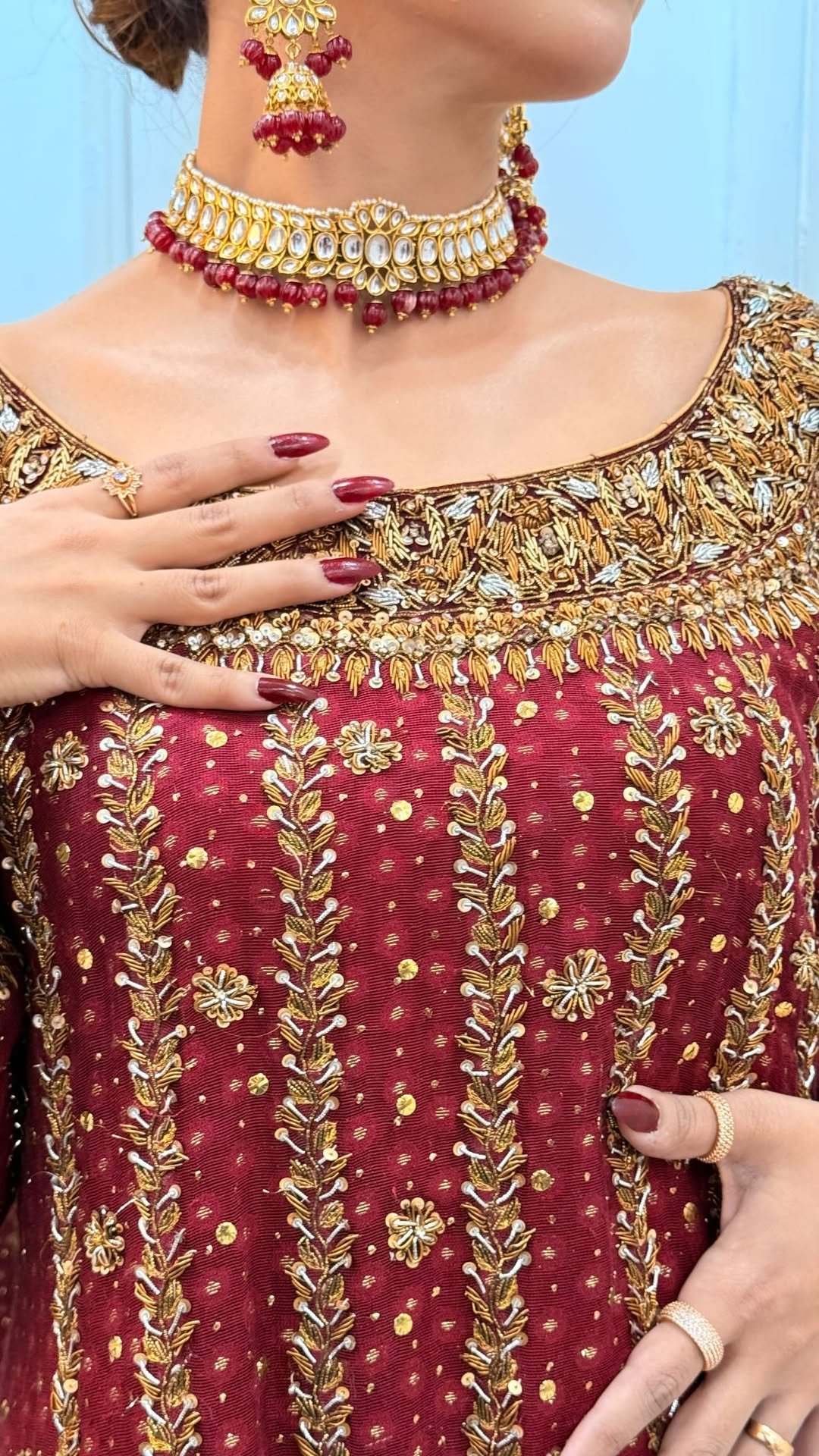
Primary Color: Deep Red, Maroon, or Deep Crimson. This color is traditional for bridal and very formal wear.
3. The Embroidery (Workmanship)
The work is incredibly rich and detailed.
-
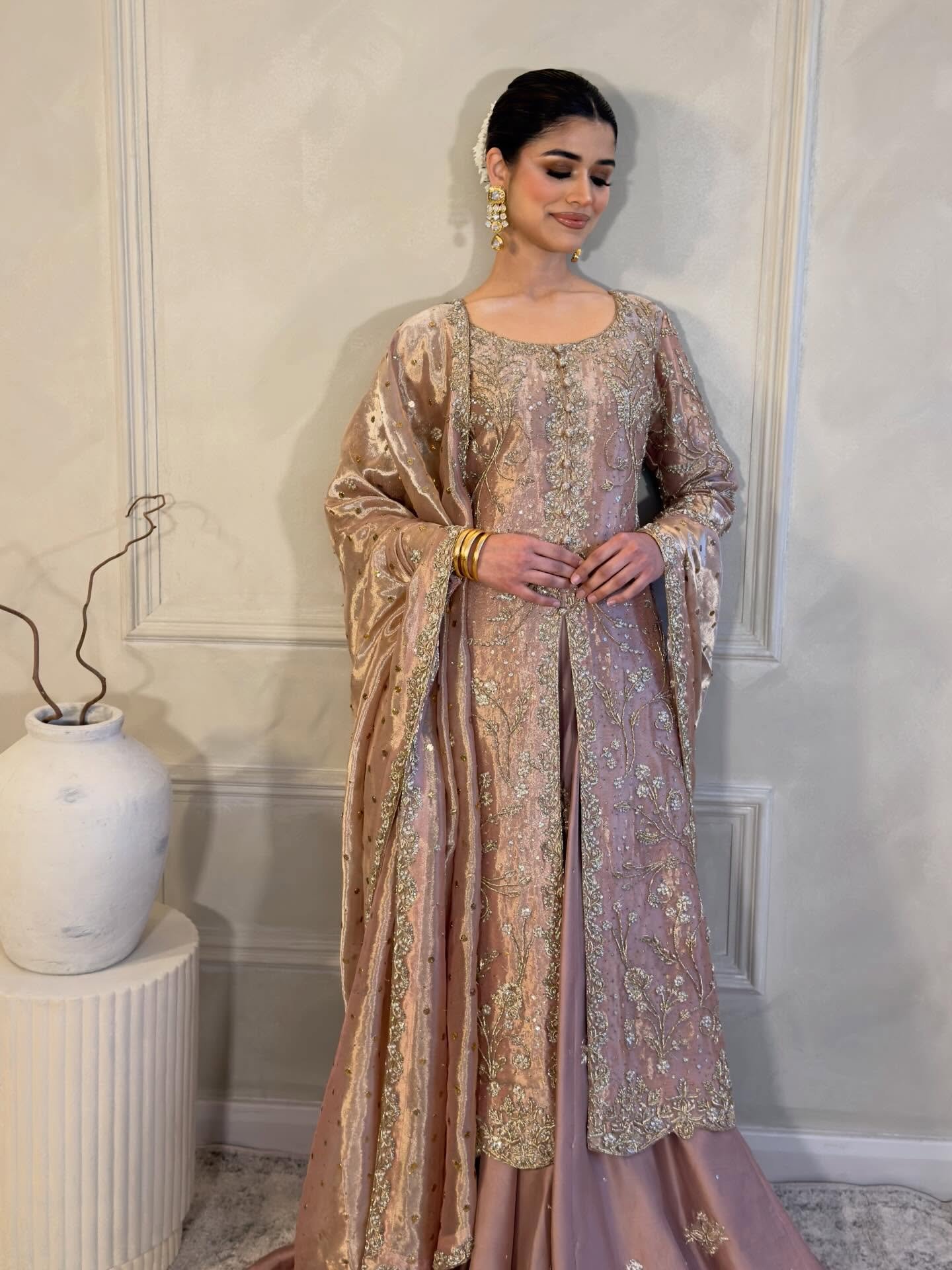
Technique: The embroidery is typically referred to as Zardozi or Tilla work.
-
Zardozi: A traditional Persian embroidery technique that uses metallic threads, often gold or silver, and incorporates elements like dapka (springs), kora (coiled thread), and often combined with beads or stones.
-
Tilla: Specifically refers to the metallic gold or silver thread used, often giving the raised, three-dimensional look seen here.
-
-
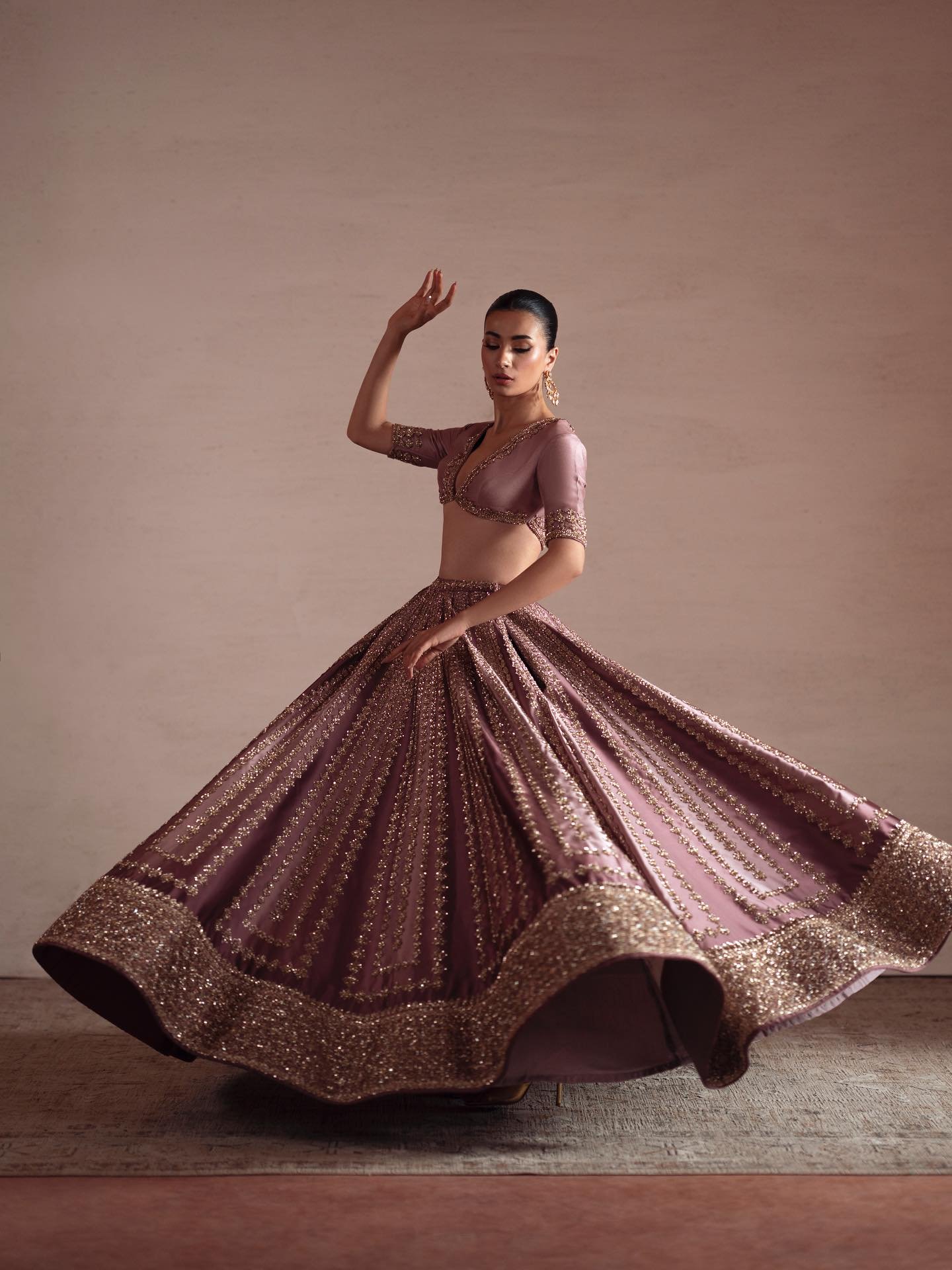
Pattern: The pattern features vertical, repeating floral/vine motifs (creeper or bel design) interspersed with smaller floral or geometric bootis (small single motifs) scattered across the fabric.
-
The Neckline: The neckline is a classic Boat Neck or wide Round Neck and is heavily bordered with dense, intricate gold and silver thread work, often incorporating sequins and small crystals for sparkle.
4. The Style/Silhouette
While only the top is visible, the style of the overall outfit that features this kind of heavy work is usually a:
-
Kameez/Kurti: A mid-length or long shirt.
-
Pishwas/Anarkali: A floor-length gown with a fitted bodice and a sweeping flare.
-
Lehenga Choli or Sharara/Gharara: The top (Choli/Kurti) is paired with a flared skirt or trousers. Given the current trends, this is most likely part of a Sharara set.


Reviews
There are no reviews yet.